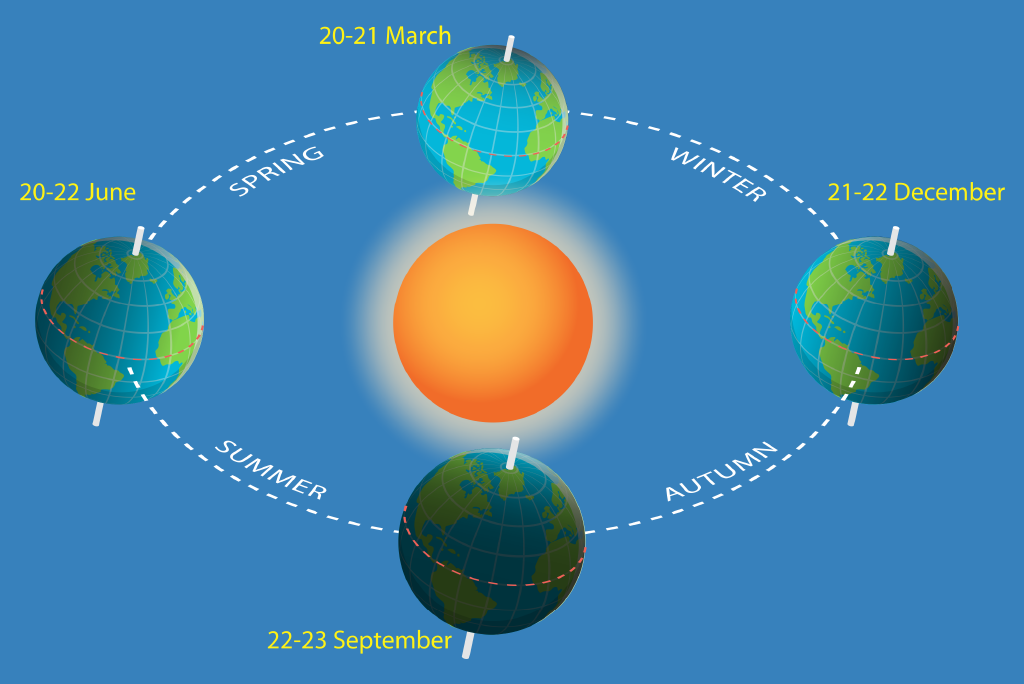
The summer solstice occurs around June 21st in the northern hemisphere. It’s the longest day of the year, when the tilt of Earth’s axis is closest to the sun. Ancient civilizations marked this day with festivals, rituals, and monuments like Stonehenge, which align perfectly with the sunrise.
Many cultures saw the solstice as a turning point in the cycle of nature. Farmers looked to the sky to decide when to plant and harvest, while priests and scholars interpreted the solstice as a sacred event that symbolized balance and renewal.
In modern times, midsummer festivals are still celebrated in Scandinavia with bonfires, flower crowns, and feasting. Astronomers continue to use the solstice as a marker for seasonal change, while climate scientists study shifts in daylight length to understand how global warming affects Earth’s tilt and weather patterns.